 yup!
github
releases
What each version brings. The full list of changes is in the changelog, and tags and source archives are on GitHub releases.
2.0.02026-11-06
YUP goes 3D, gets its own JIT-compiled DSP language and a portable GPU layer, and its interface becomes touch-first with a much larger widget set.
3D
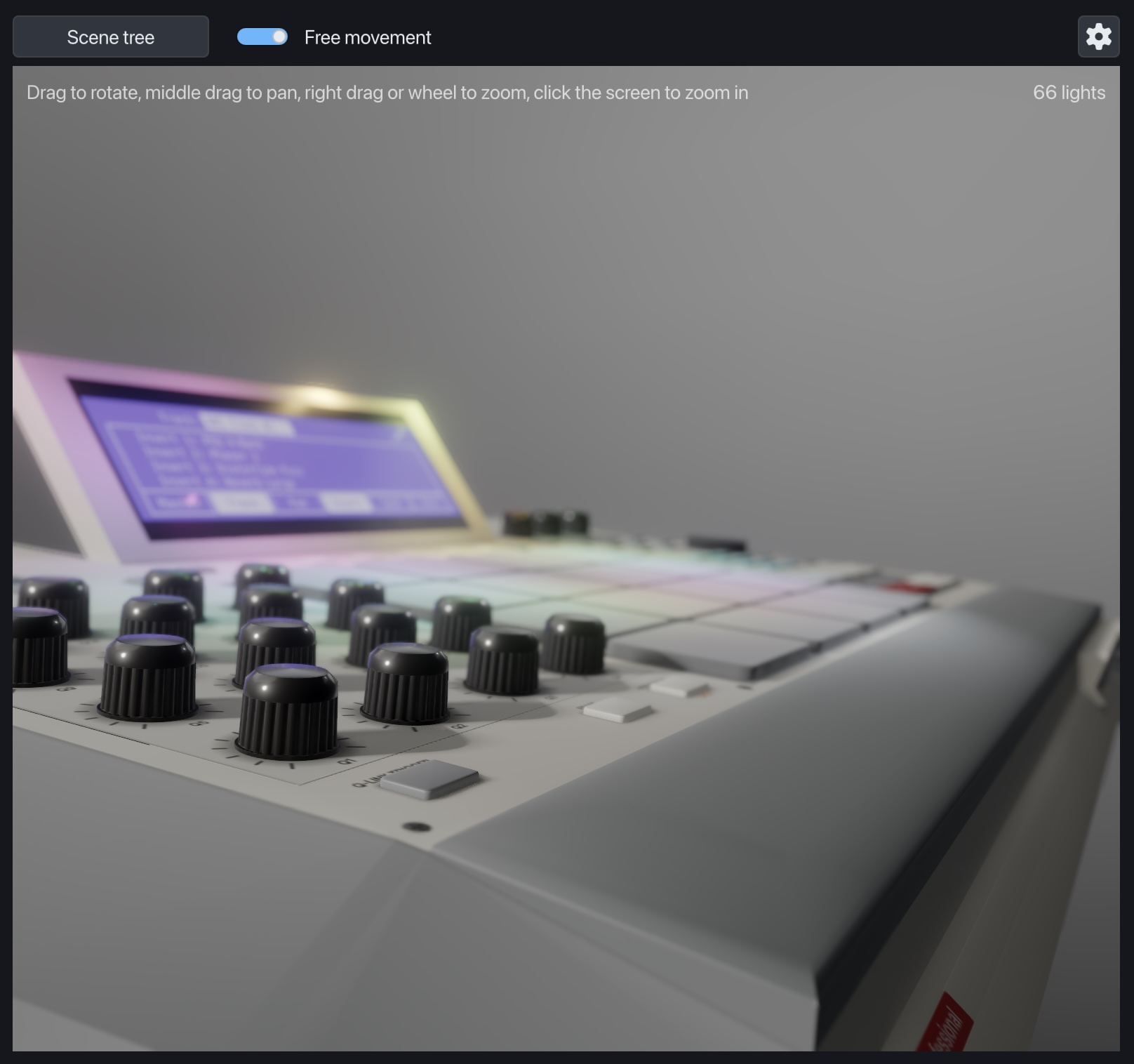
- A new 3D module: scenes built as a small entity-component system, scenes with prefabs and glTF 2.0 model loading.
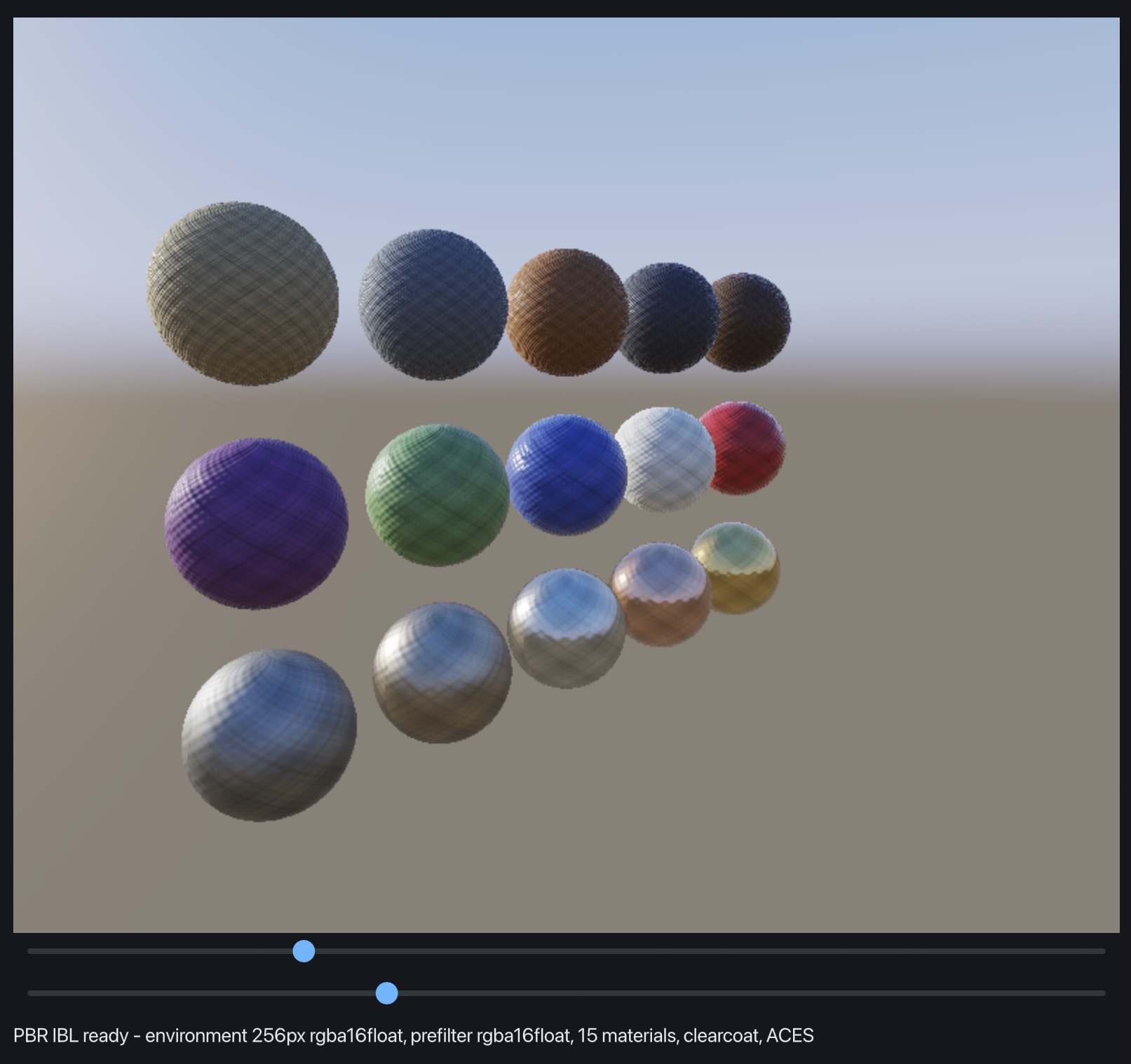
- A new renderer with two tiers: a forward raster tier that runs everywhere, and a full tier with HDR, temporal anti-aliasing and deferred shading with any number of lights.
- Cascaded sun shadows, soft point and spot shadows, contact shadows, ambient occlusion, screen-space reflections, reflection probes and irradiance volumes.
- Depth of field with a physical camera, motion blur, height fog, bloom, ACES and AgX tone mapping, and temporal upscaling.
- Picking with rays, per-frame GPU statistics and debug views for depth, normals, motion and materials.
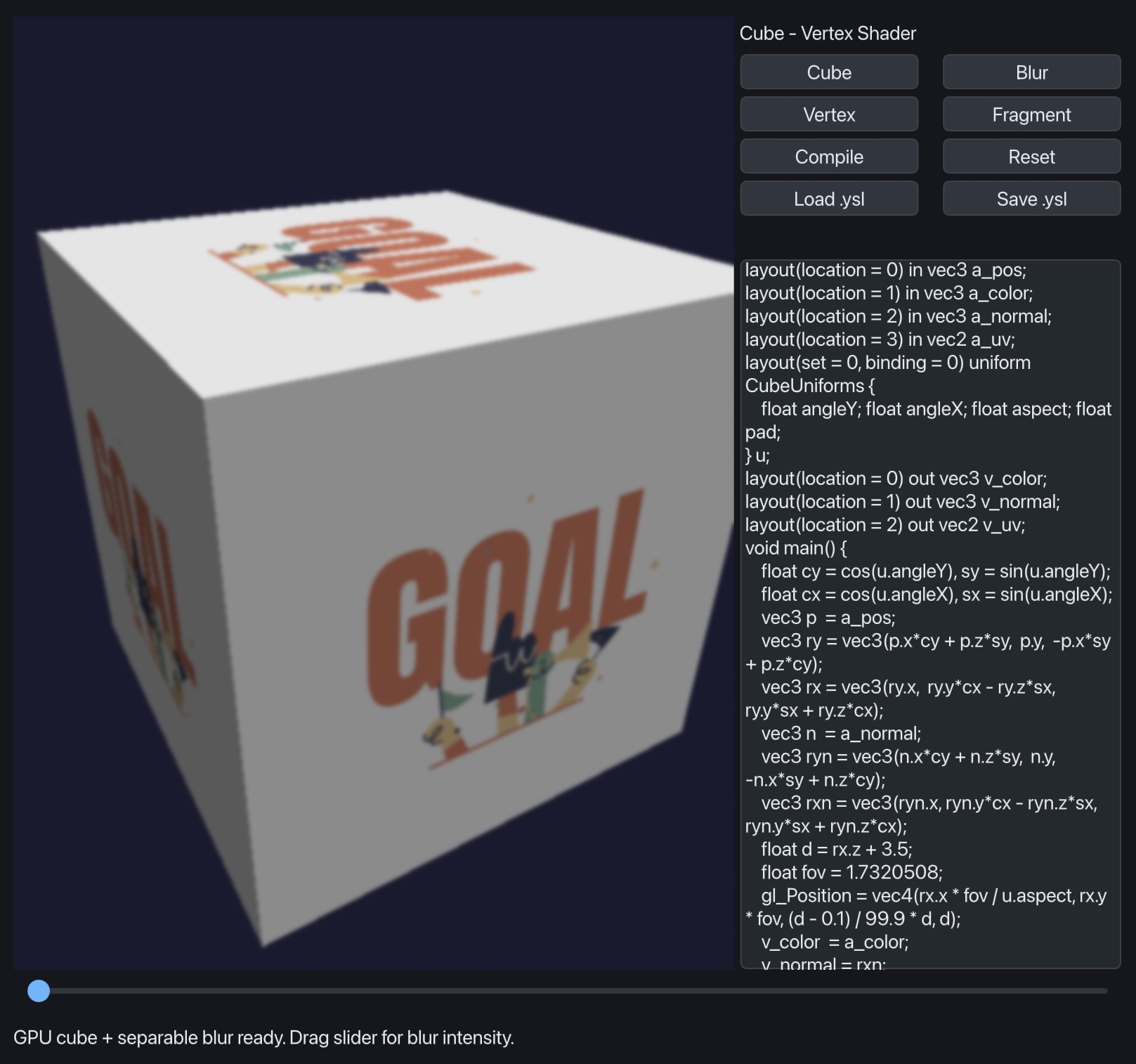
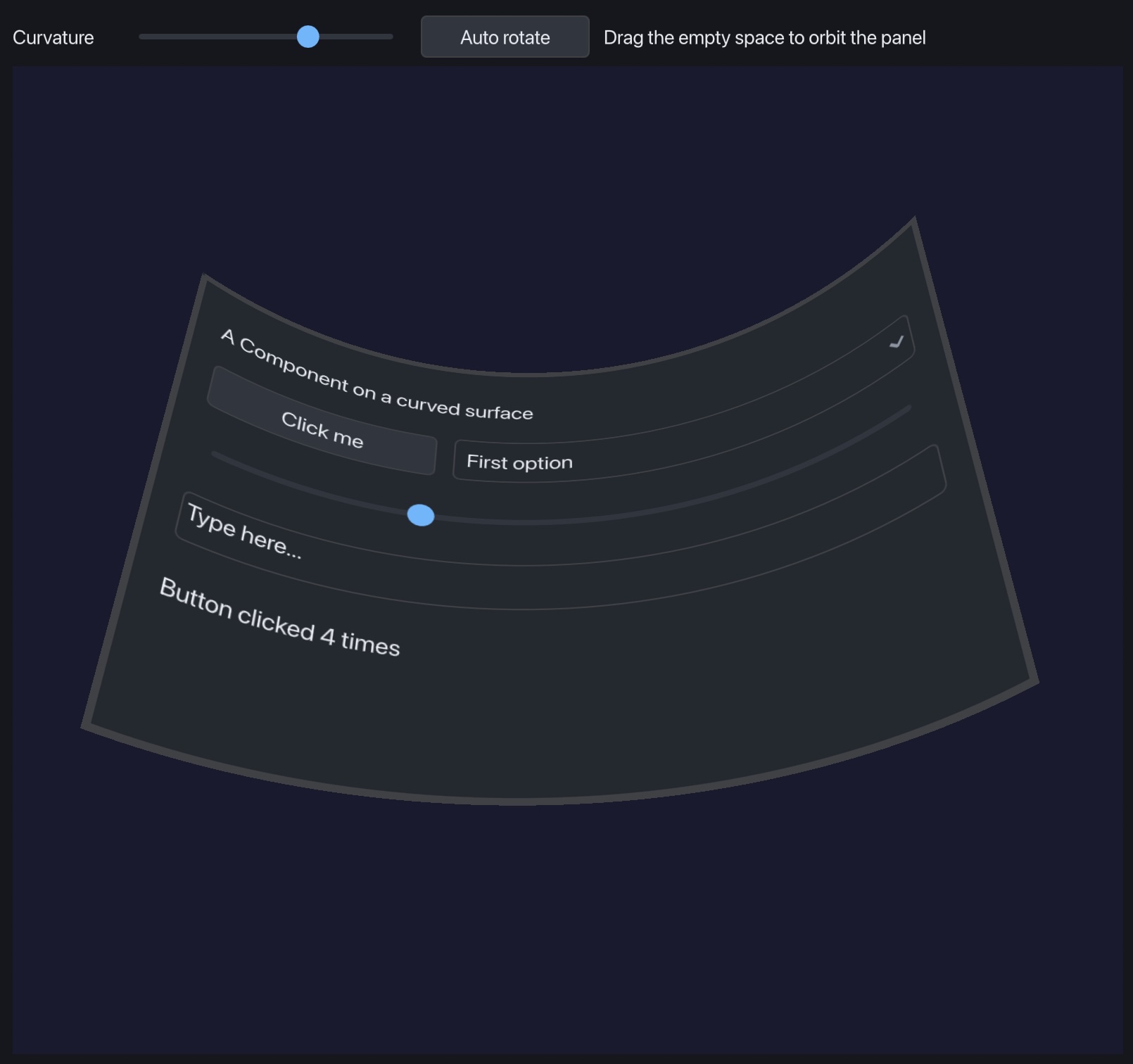
- Render 3D objects inside 2D Components, map 2D Components onto 3D surfaces.
GPU
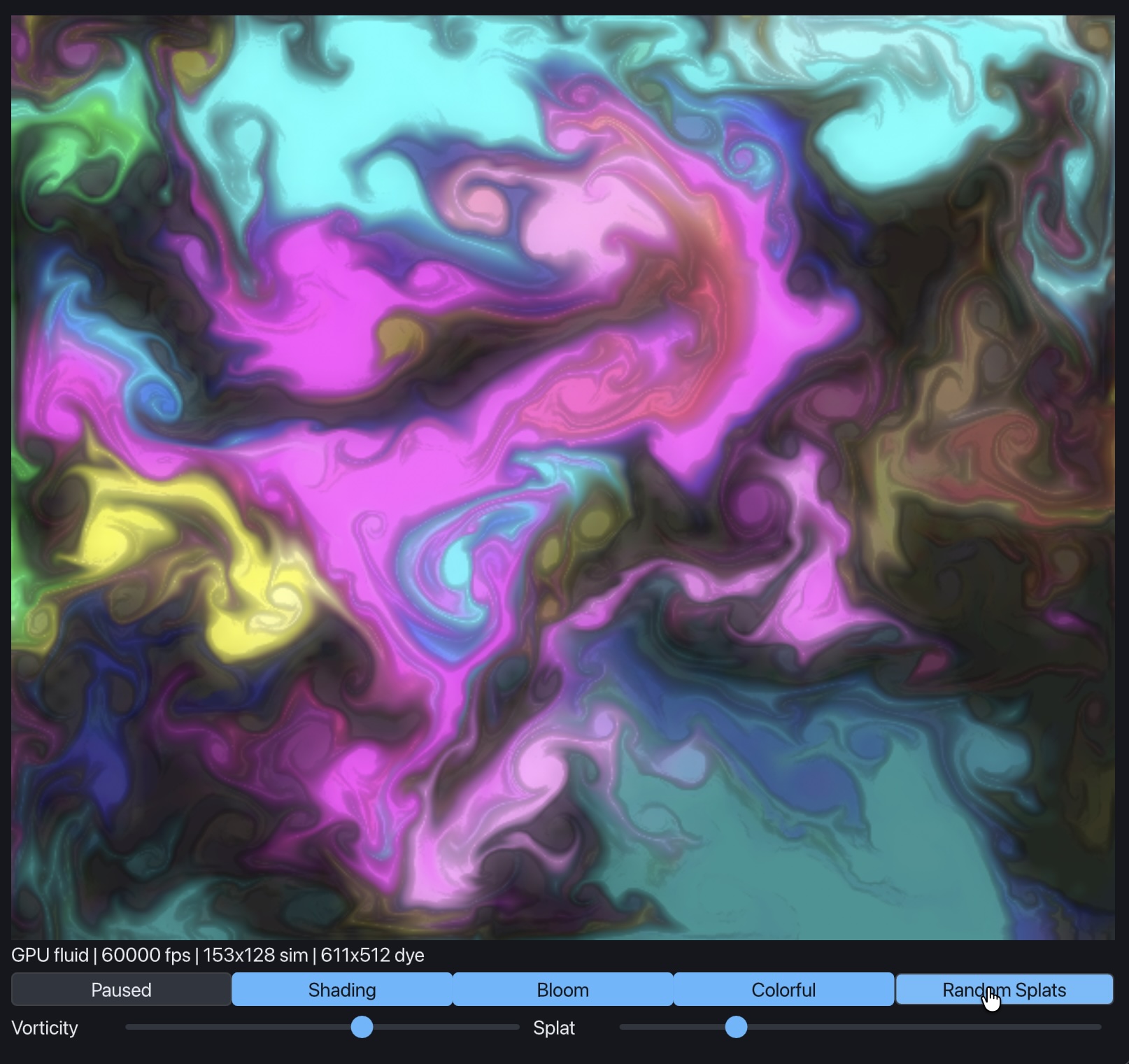
- A new RHI module: render and compute pipelines, buffers, textures, samplers and depth targets on Metal, Direct3D 11, OpenGL, WebGPU and Vulkan.
- Vulkan is a new backend, and the default on Android. On macOS, rendering is Metal only.
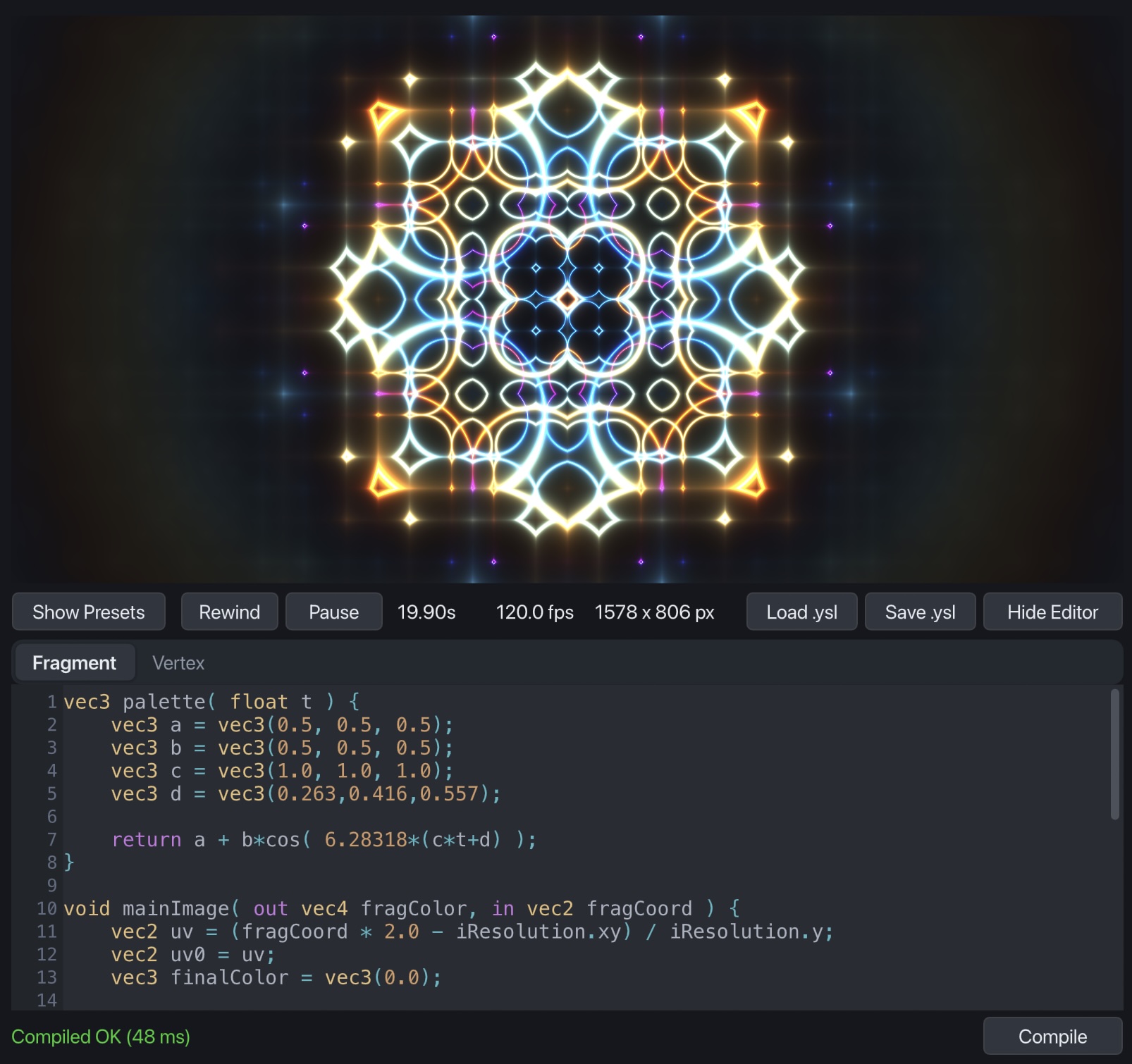
- Compute shaders on Metal, Direct3D 11, OpenGL, Vulkan and WebGPU, with a GPU audio processing demo.
- Write shaders once in GLSL: they compile to MSL, HLSL, GLSL ES, SPIR-V and WGSL, and ship as compressed shader bundles built with your project.
- WebGPU is now the default renderer in the browser.
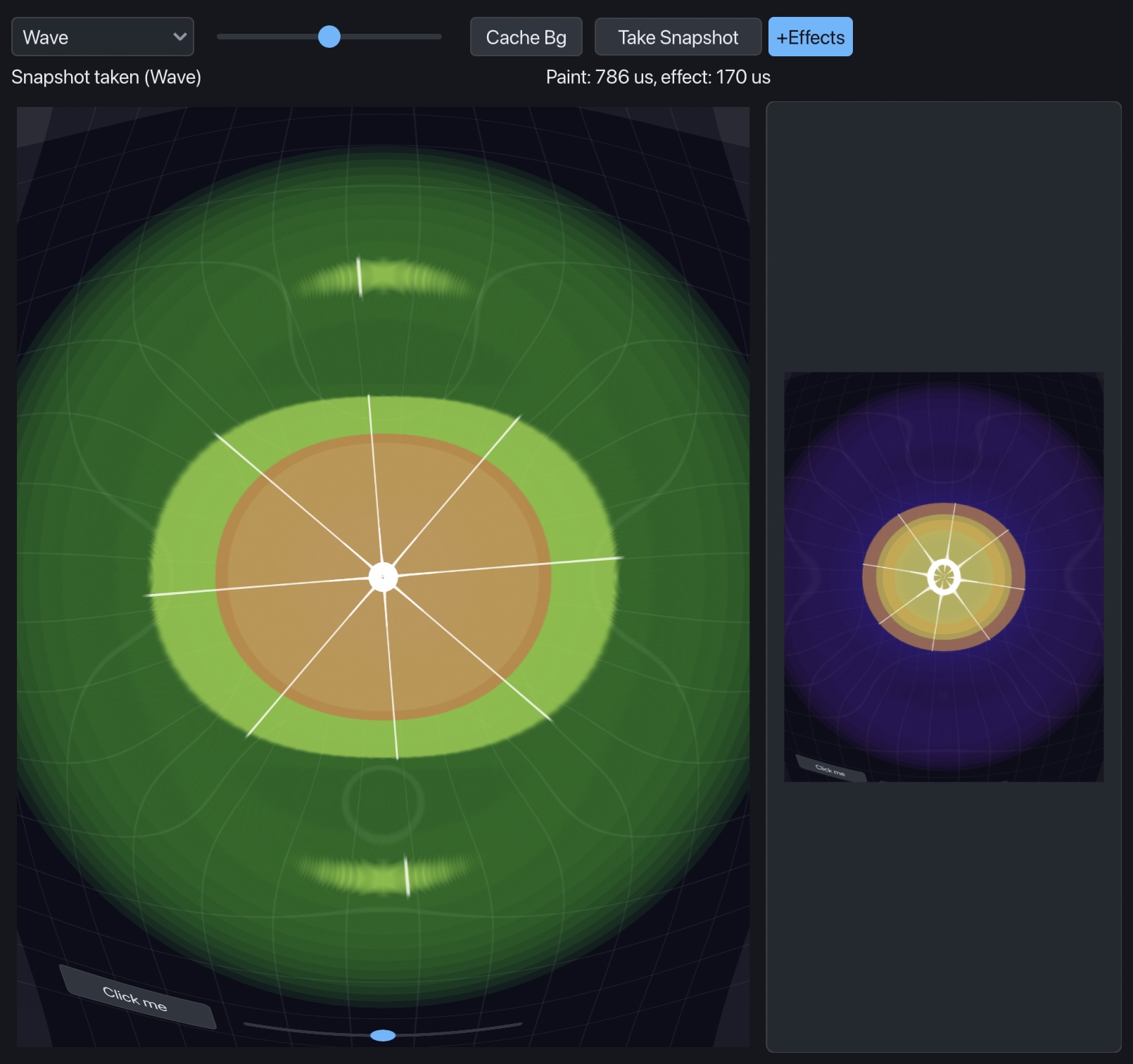
- Components can be cached to textures and use shader effects with mouse warping.
YDSP
- YDSP is a new real-time DSP language compiled at runtime to native ARM64 and x86-64 code, and to WebAssembly SIMD in the browser.
- Processors and graphs combine Faust-style composition with Cmajor-style definitions: voice banks, MIDI and MPE events, oversampling and undersampling, automatic delay compensation and parameter smoothing.
- An optimizing compiler with vectorization, fused math and bounds checks that cost nothing when they can be proven safe.
- Projects and precompiled bundles, a command line compiler and player with hot reload, and a VS Code extension.
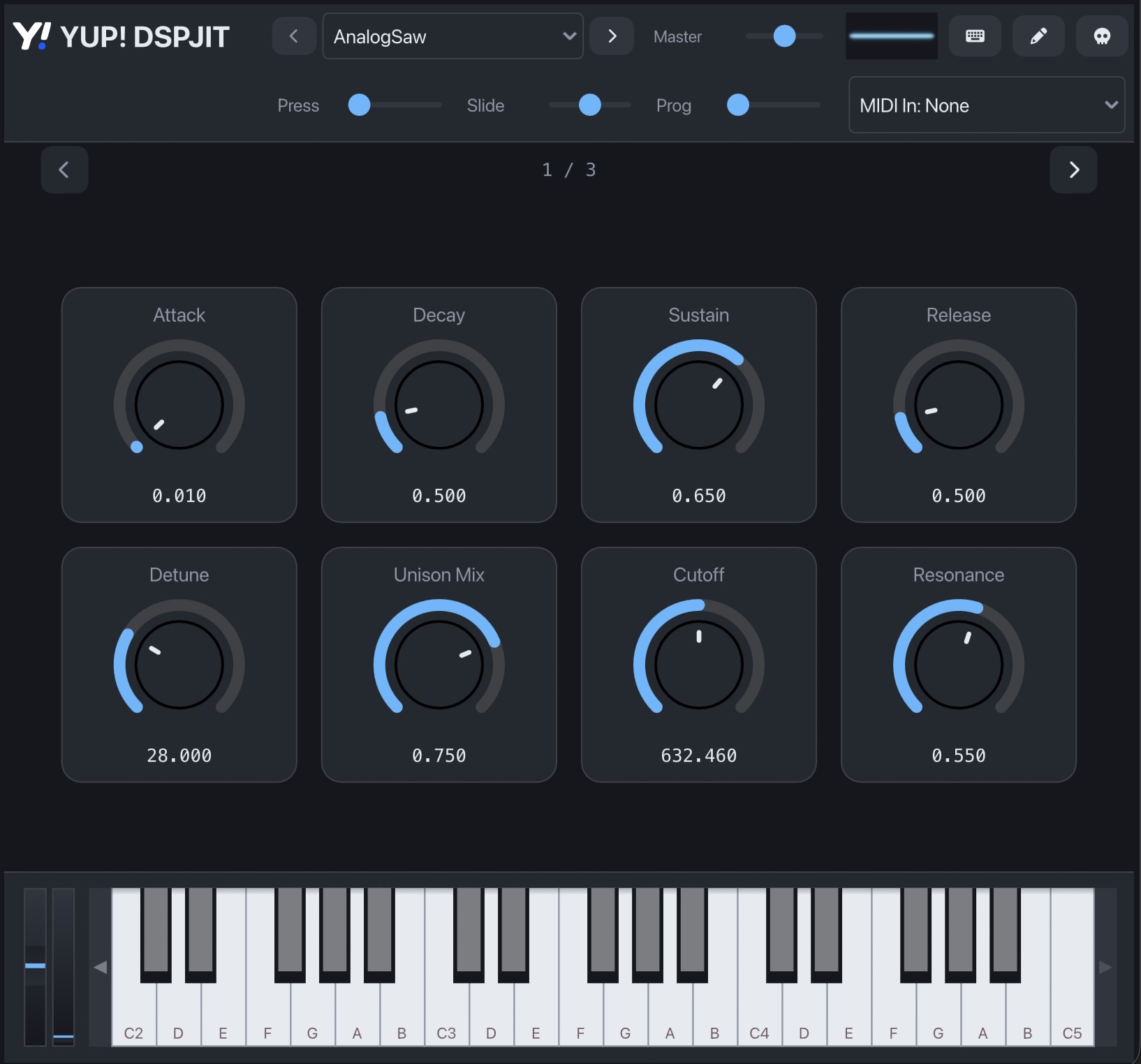
- The graphics example plays a collection of YDSP synths, from electric piano to drums.
Graphics
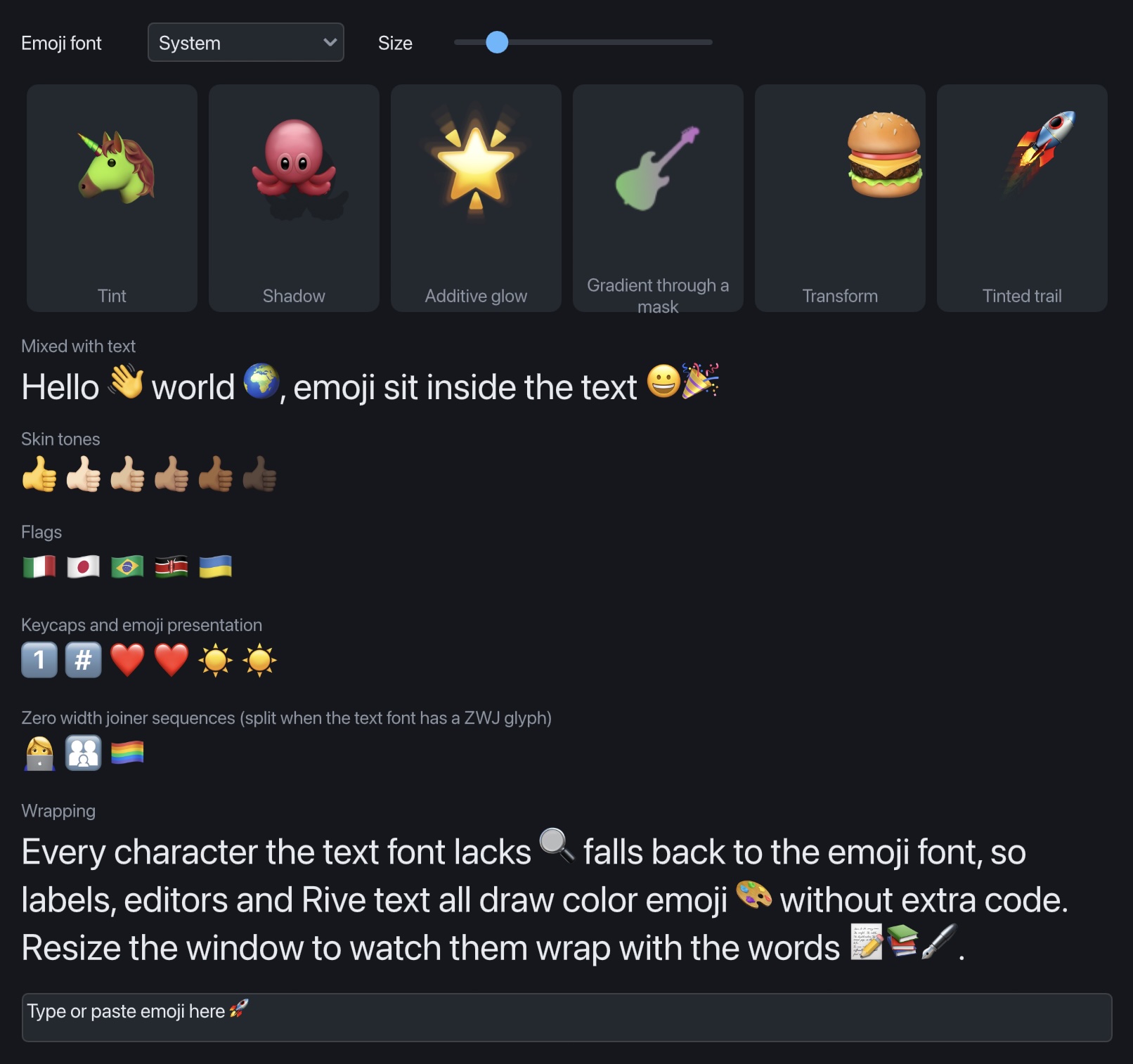
- Color emoji in every text, Unicode line breaking, and a monospace font in the default theme.
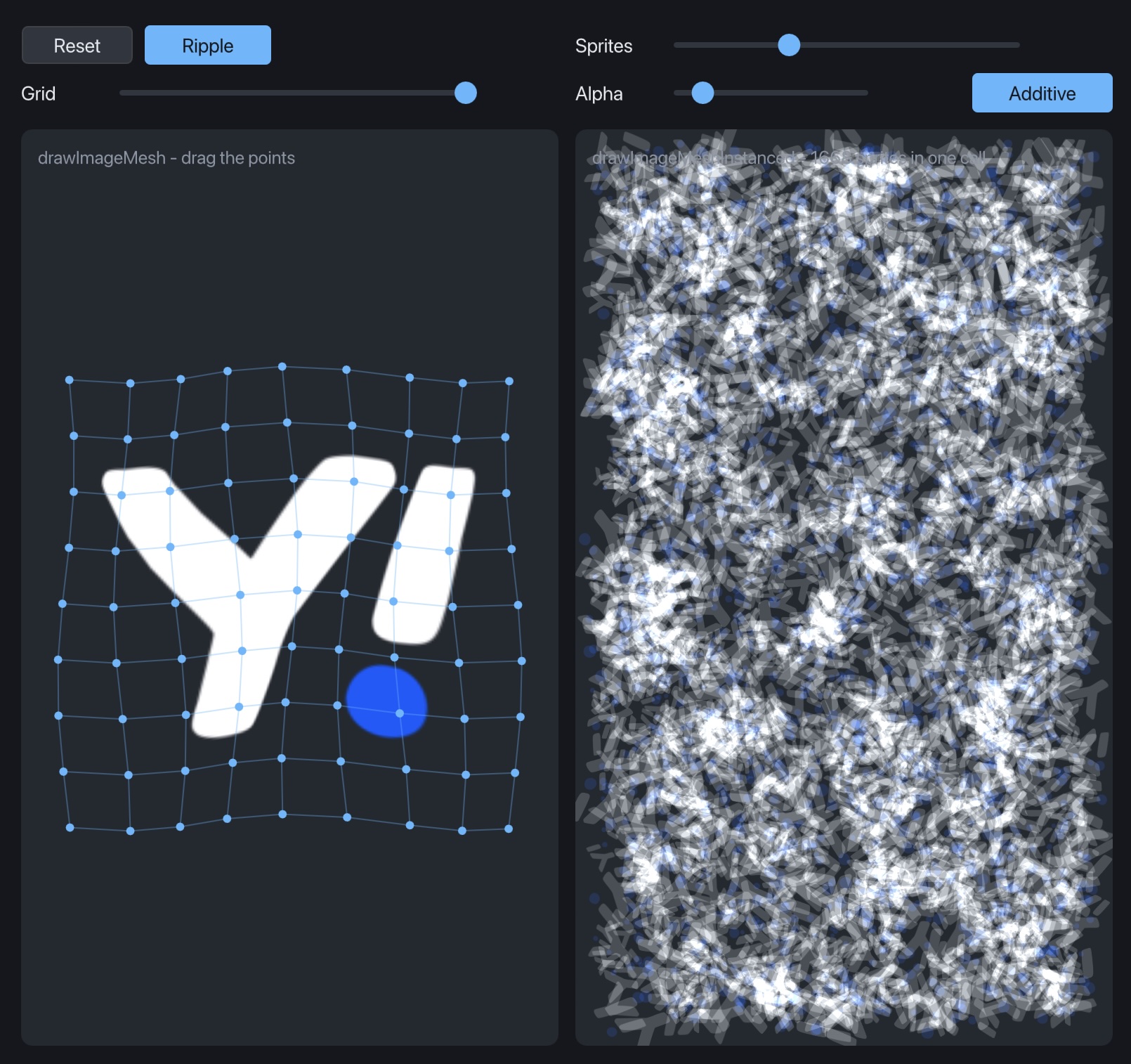
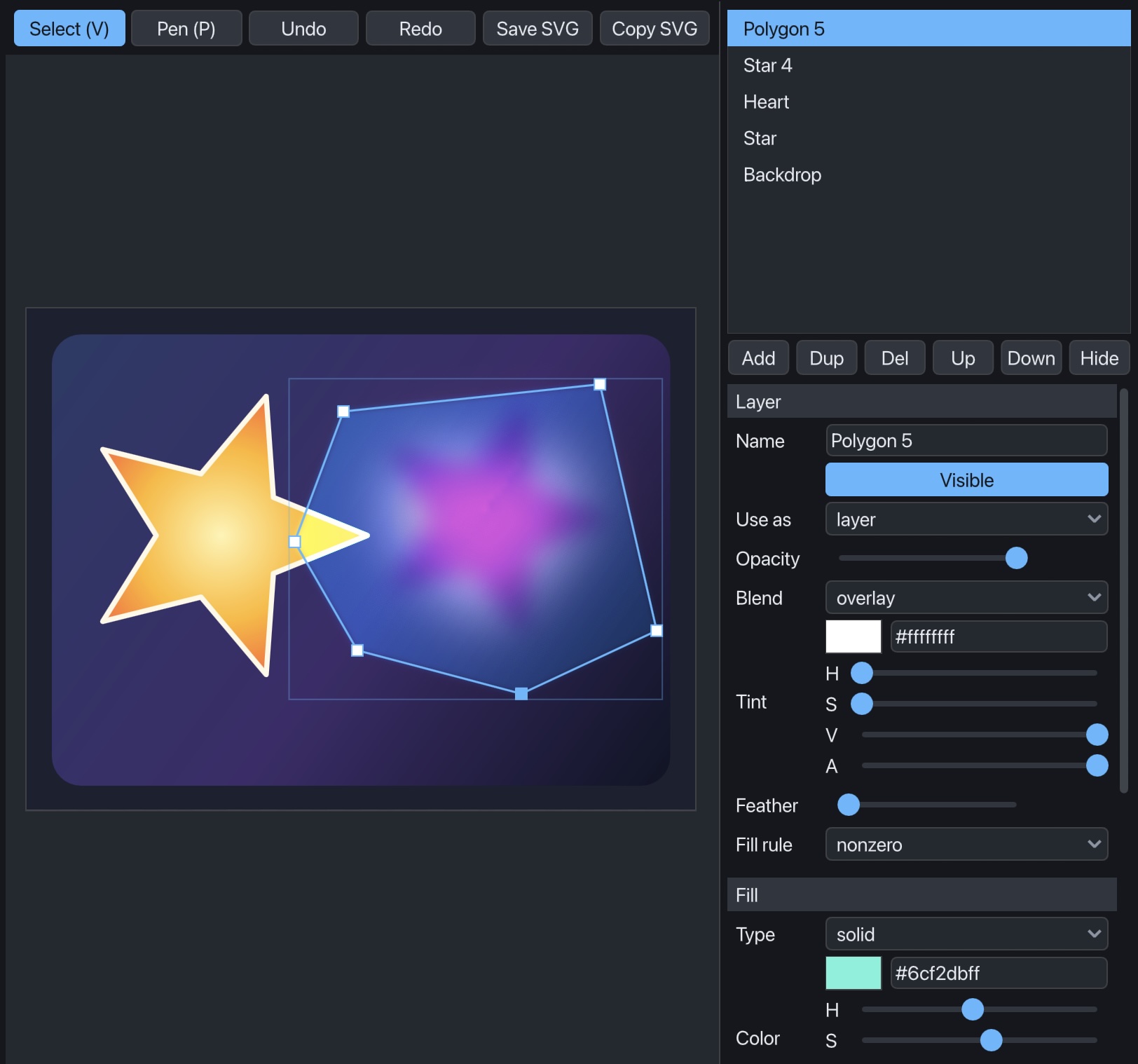
- Image meshes for warping and instanced sprites, clipping to strokes, layer masks, additive blending and inside or outside strokes.
- TIFF, TGA, animated PNG and animated WebP images, with metadata.
- Rive updated, with grid layout, scripted files, ViewModel data binding and full input on artboards.
- Lottie gains merge paths and better mattes, precompositions and expressions.
Interface
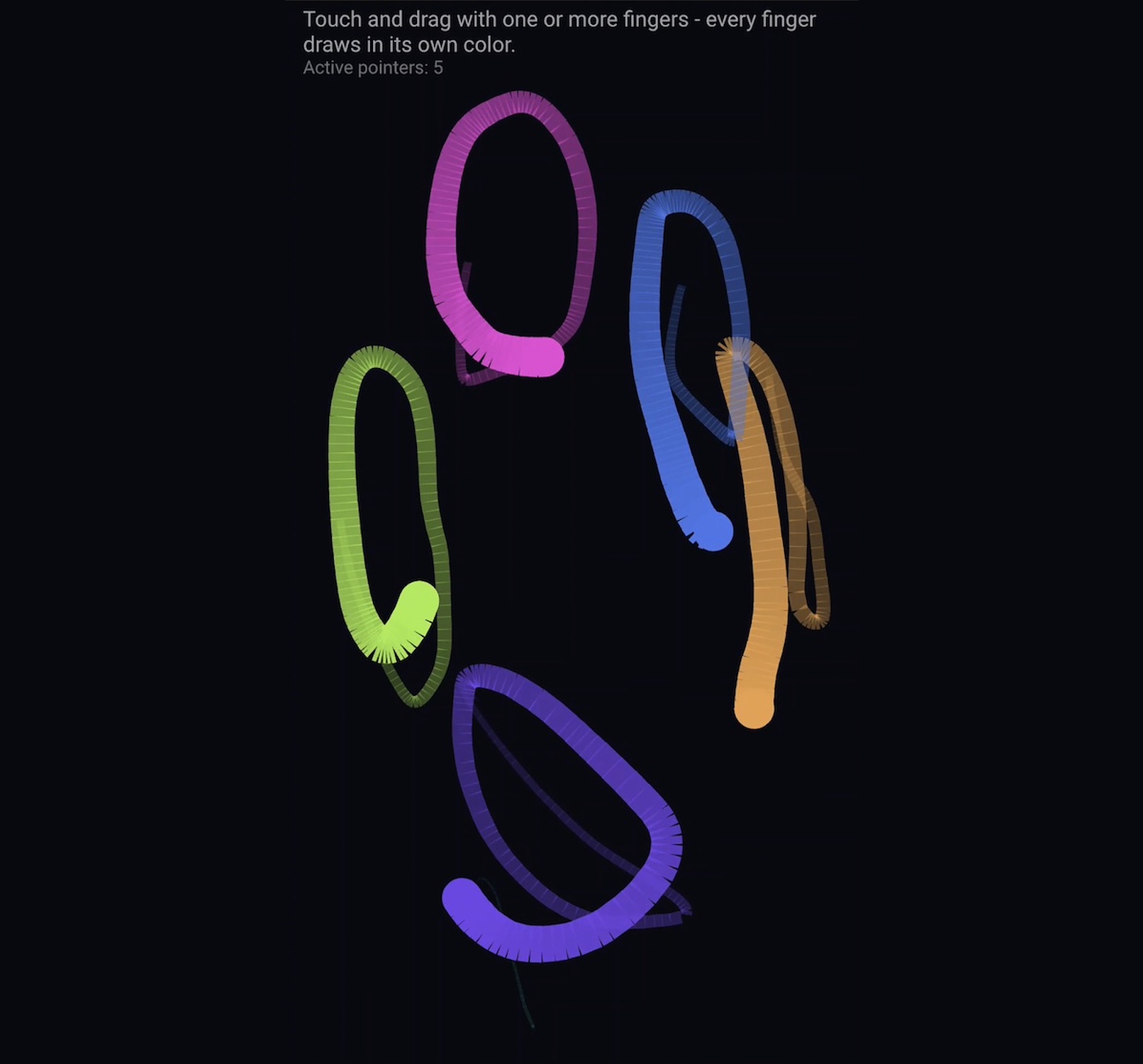
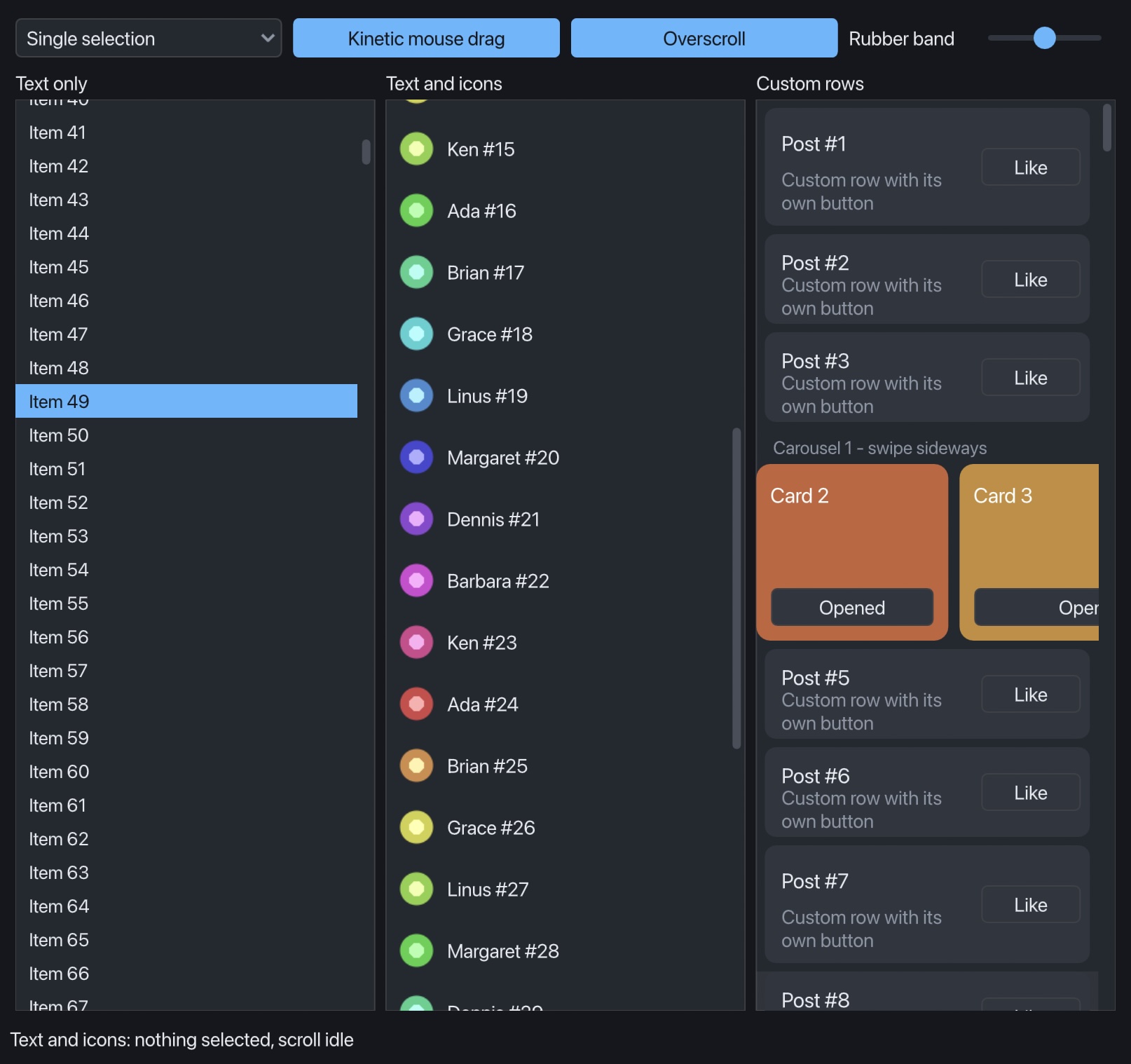
- Multitouch everywhere, and gestures: tap, double tap, long press, pinch, rotate, pan and swipe.
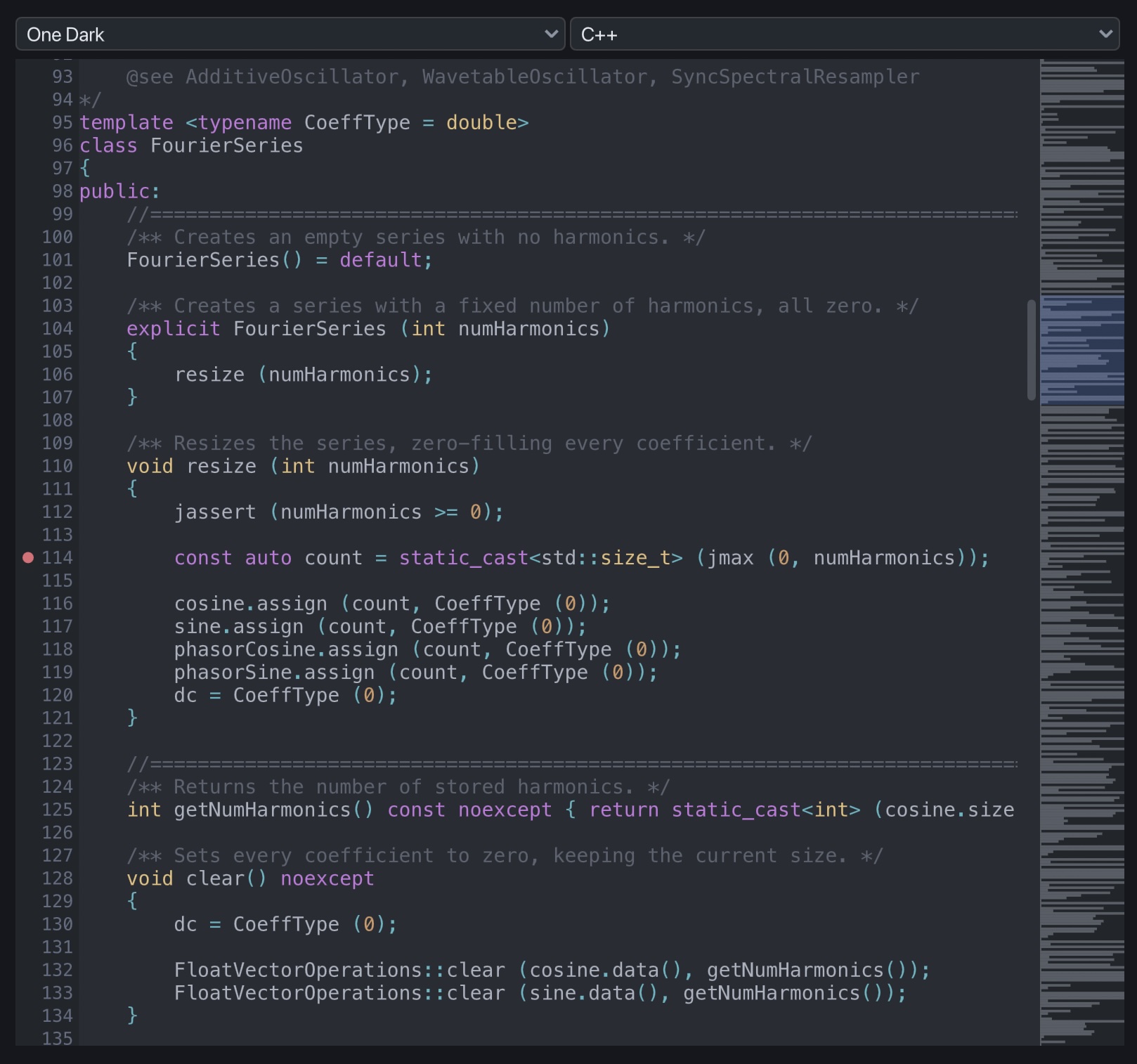
- New widgets: tabs, tree views, a touch-first list box with fling scrolling, and a code editor with syntax highlighting.
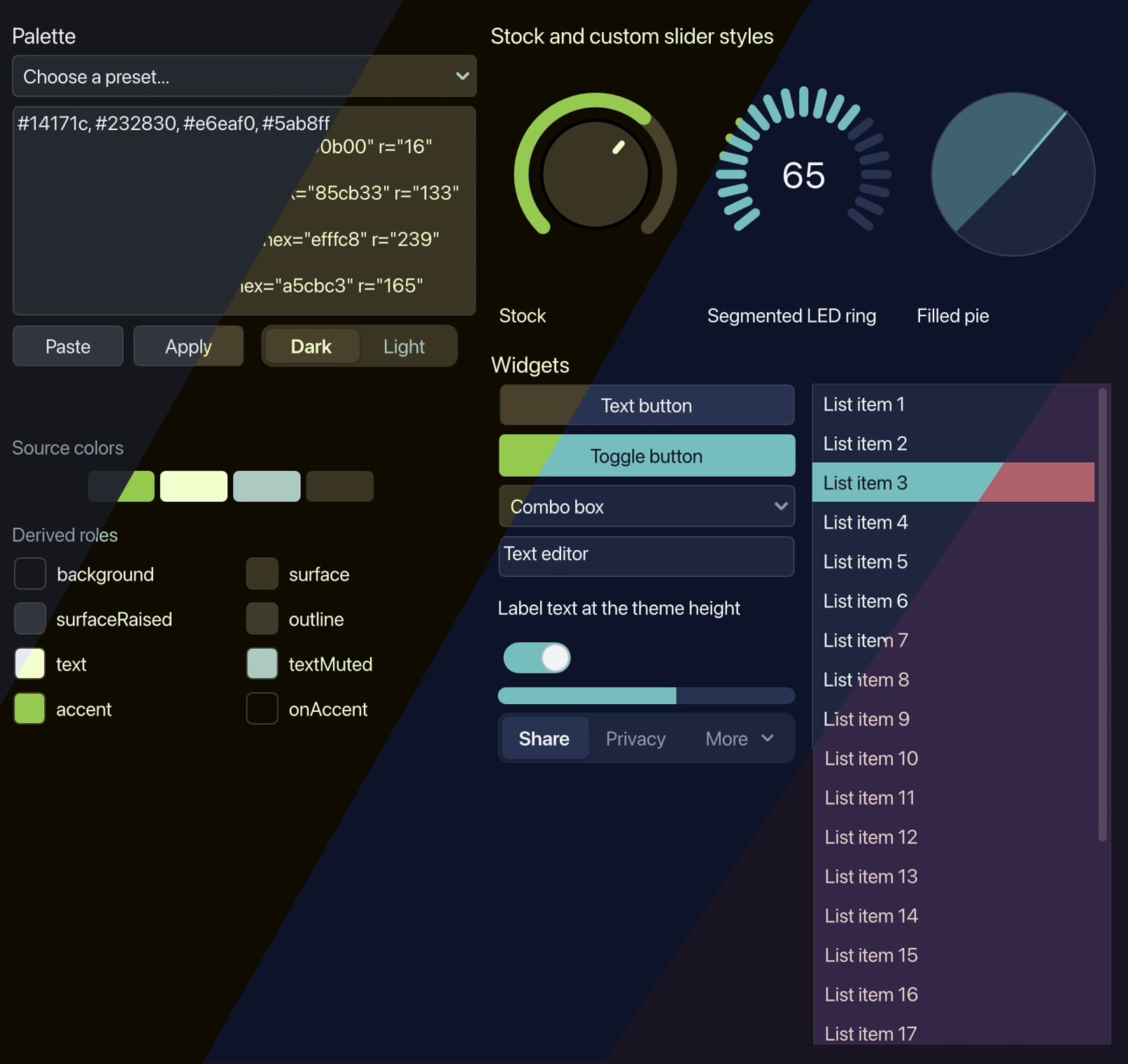
- Themes from a palette: give it any colors and the whole app recolors at runtime, in dark or light mode.
- Drag and drop that carries any data and can leave the app, plus primary selection and any data on the clipboard.
- Mobile apps keep their content clear of notches and system bars, and Windows and Linux scale with high density displays.
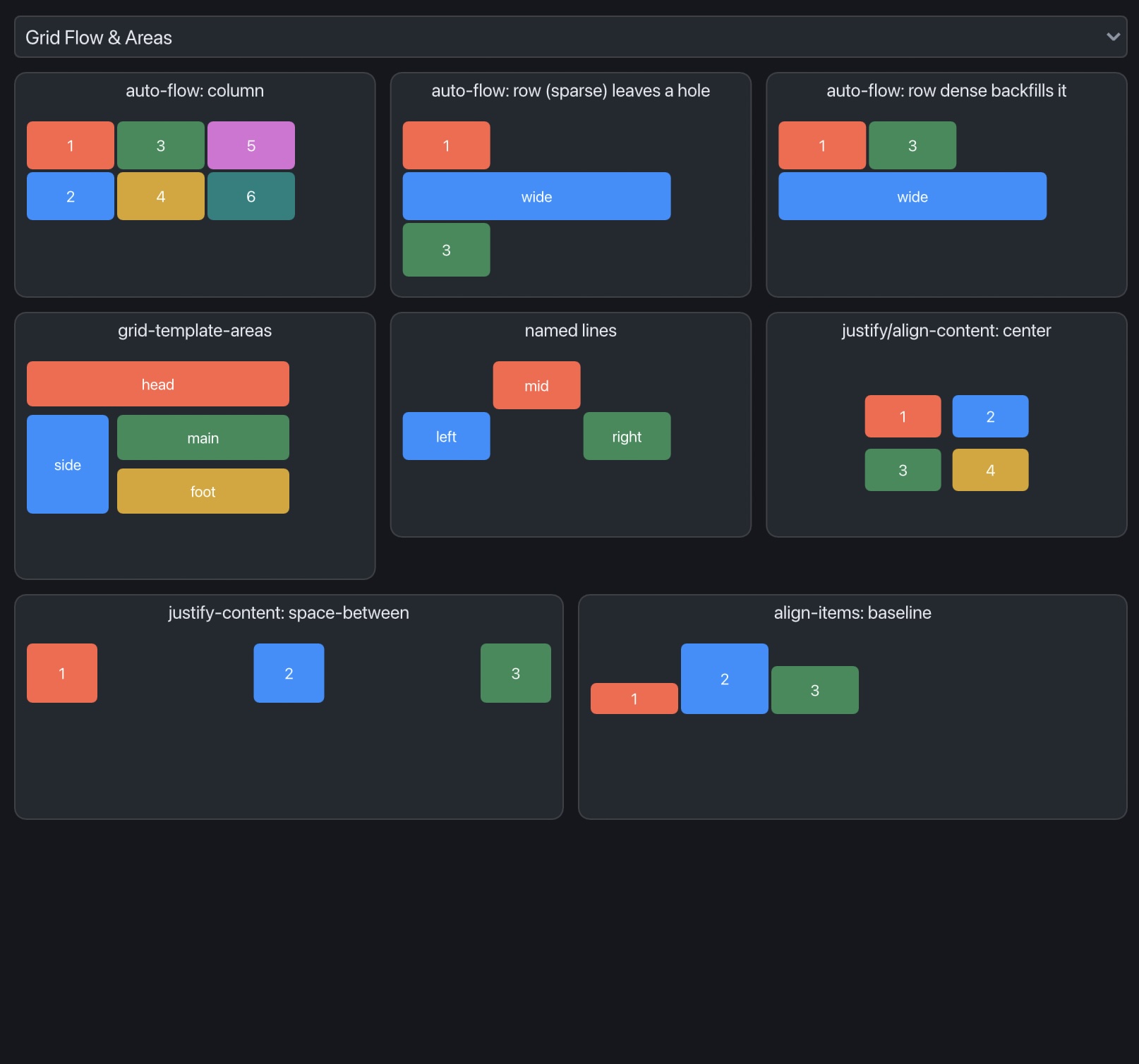
- FlexBox and Grid layouts that follow the CSS rules, with named areas, gaps, padding and auto margins.
- Transforms apply to whole component trees.
- Windows can be transparent, always on top or unfocusable (desktop).
- Every window renders on its own thread, paced to its display's refresh rate.
Audio
- New oscillators and filters: a spectral Prism oscillator, band-limited modulated oscillators with FM and phase distortion, a virtual analog state variable filter and an LFO.
- Halfband and faster sinc oversamplers, double precision FFTs and tuning maps for any scale.
- Sidechains and multiple buses in every plugin format.
- Web MIDI in the browser, pitch and mod wheels, and a multitouch MIDI keyboard.
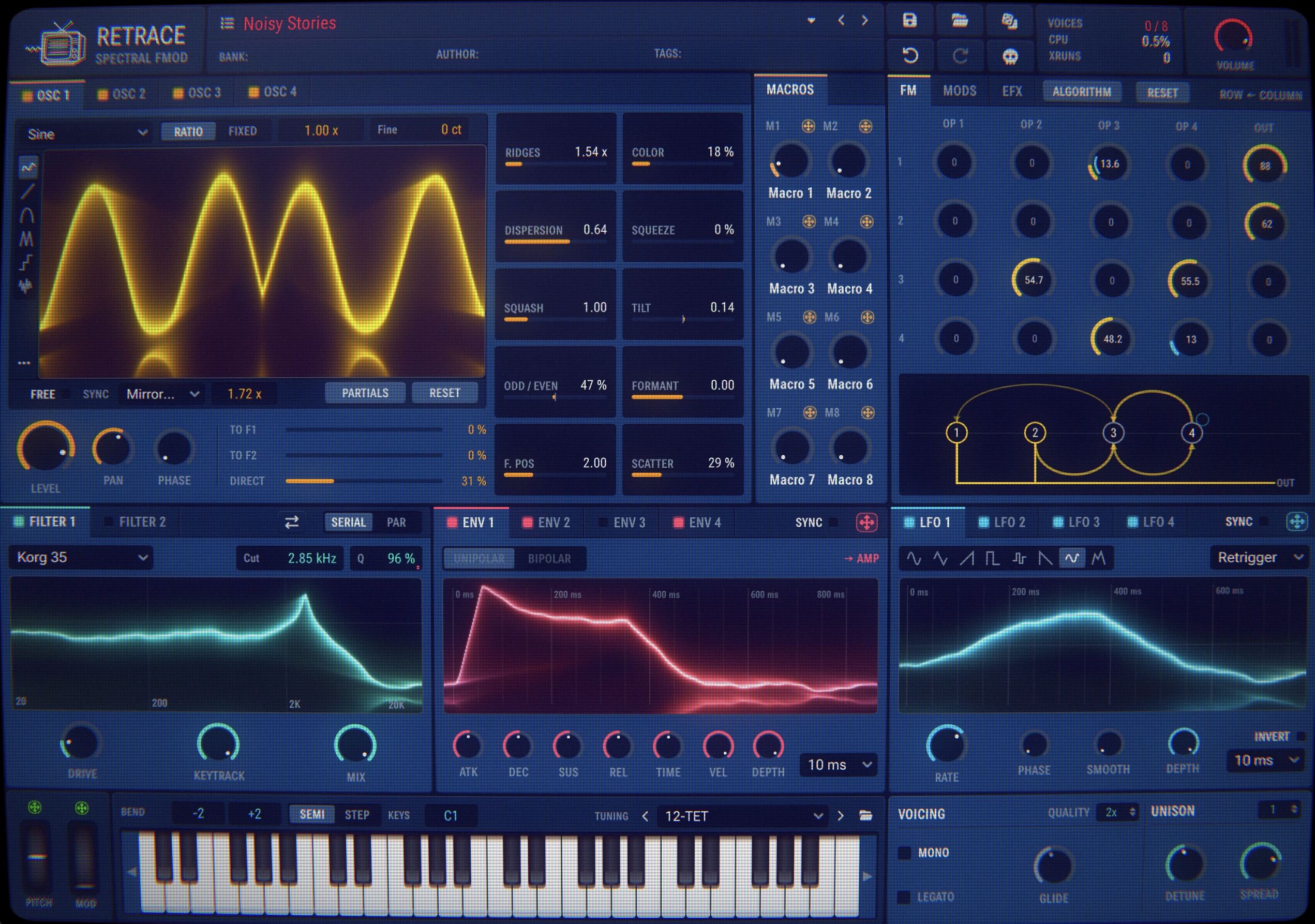
- Retrace, a complete synthesizer, is the new plugin example: drawn wavetables, unison, an effects chain, microtuning, a preset browser and an MCP server for AI assistants.
AI
- A new AI module: chat clients for OpenAI, Anthropic, Gemini and compatible servers, with streaming, tool calling and structured output.
- Embeddings, and Model Context Protocol clients and servers.
Core and tools
- YAML, signals with scoped connections, cancellation tokens and timers precise to below a millisecond.
- Security hardening across strings, XML, JSON, YAML, archives, zip files, networking and file permissions, plus a cryptographic random generator.
- Much wider Python bindings, including the GPU layer, layouts and AI.
- Bundled resources and app icons in the build, Android 16 KB page support, and building the tests of selected modules only.
This is a major release with breaking changes. The changelog lists each one and how to migrate.
1.0.02026-07-03
The first release of YUP: one C++ codebase for apps and audio plugins, painted on the GPU, running on desktop, mobile and the web.
Everywhere
- Windows, macOS, Linux, iOS, Android and the browser, built from the same sources.
- In the browser, audio runs in an AudioWorklet and apps can use threads, with a file system to read and write.
Graphics
- A GPU renderer on Metal, Direct3D and OpenGL, built on Rive: paths, gradients, strokes with soft edges and text.
- SVG 1.1 drawing, and reading and writing PNG, JPEG, WebP, animated GIF, BMP and Netpbm images.
- Offscreen rendering to images and textures, with group opacity layers.
Animation
- A new animation module plays Lottie files: playback in both directions, loops, speed and seeking, with expressions.
- Animations can be edited in code, saved back to Lottie, and exported as frames or as animated GIFs.
Audio
- Build plugins as CLAP, VST3 and Audio Unit (AUv2), plus early AUv3, AAX and LV2. Plugins also run as standalone apps.
- Host CLAP, VST3 and Audio Unit plugins inside your own app, and connect them in an audio graph.
- Read and write WAV, FLAC, Opus, MP3 and AAC, with the native decoders on Apple platforms and Windows.
- A DSP module: FFT, IIR and FIR filters, crossovers, virtual analog filters, convolution, oversampling, time stretching, spectral processing, onset detection and distortion.
- MIDI 2.0 support through Universal MIDI Packets.
Interface
- Themes for every widget, popup menus, combo boxes, text editors and labels, a native file chooser and the clipboard.
- Audio widgets: a MIDI keyboard, filter response curves, a spectrum analyzer, a spectrogram and an oscilloscope.
- Rive artboards inside the interface, driven by their state machines.
- A paint profiler to see where each frame's time goes.
Data and tools
- A data model for app state: an observable tree with transactions, undo, queries and schema validation.
- SQLite databases, file watching, a JavaScript engine, SIMD math and Perfetto profiling.
- Python bindings for YUP.
Build
- CMake modules that pull in what they depend on, catch circular dependencies and set per platform options.
- Plugin validation and code signing in the build, code coverage, and sharded test runs.
Plus many fixes across platforms, from a startup crash on custom scaled screens to thread safety in CoreAudio and the audio device manager.